Opera: A New Hope
My last blog "The Cultural Extinction of Opera" discussed a Once and Future Opera where our audiences are getting smaller and where academic and YA programs aren't pivoting to create new curriculums to help prepare the next generation for this possible future. It attempted to lay out what we might need to do to curtail this extinction, but also tried to give some examples that I've been a part of which might help. It was a wee bit bleak, even for a midwinter's commute on the Ontario/Quebec ViaRail line. Here's a link to that blog: https://coachcraft.ghost.io/the-cultural-extinction-of-opera/
This blog - hopefully - offers more Hope. At least it's a blog where I'll discuss some bright spots in our sector.
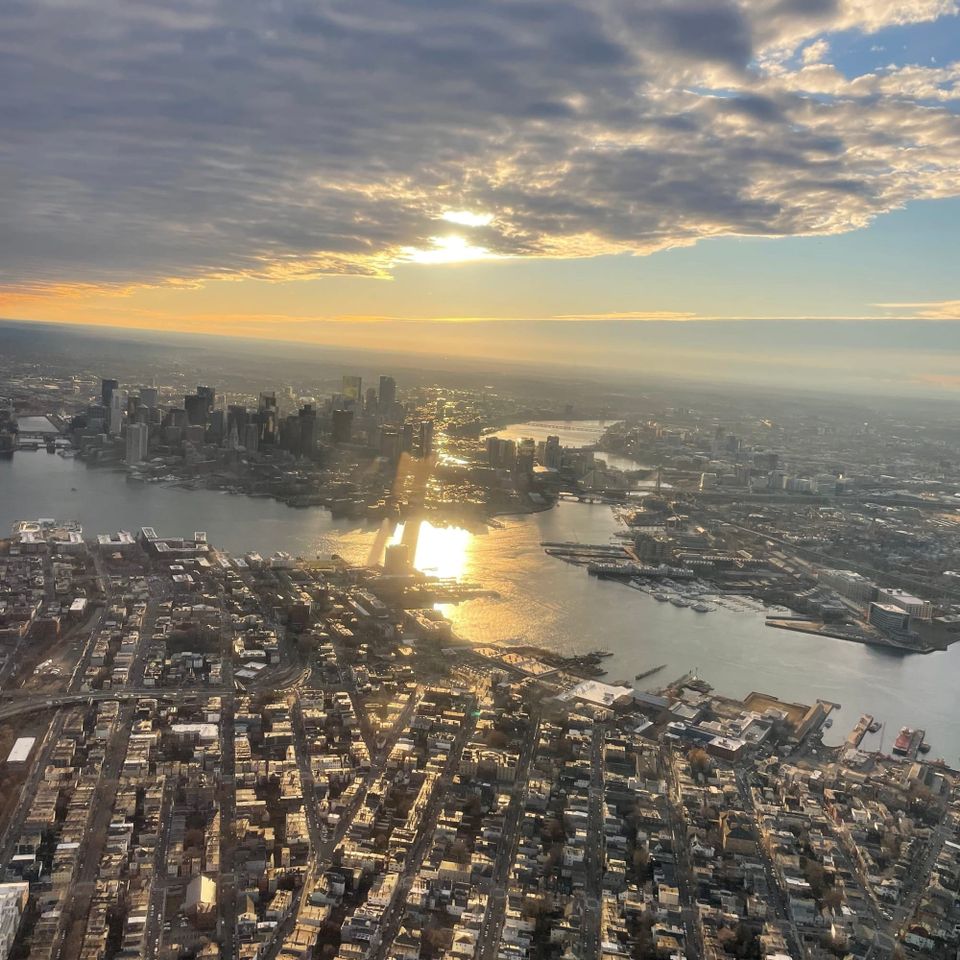
This past January, I was in Boston attending the National Opera Association's (NOA) annual conference. It was a GREAT conference! I love the NOA for many reasons (not the least being I'm newly elected to their board of directors) and I'd like to start there.
The NOA has been around for decades and decades. Membership is open to all, and I find it filled with unicorns deserving of being celebrated nationally: people young and old from institutions big and small; voice teachers & coaches, stage directors, composers, singers, administrators, and lots of students! It's not just a conference of talking heads, there's actual performing that happens. Tons of singing! From our annual in-person scenes competition, to the one-act opera competition, to the lucrative prizes of the Argento voice competition, there's so much singing at an NOA conference. It's where we get to hear who is out there from programs all over North America. This year, there were standout singers from Texas, Ohio, Massachusetts, Maryland, South Korea, Washington, and all parts in between.
On top of the singing, this year's panels and sessions were terrific. The keynote speaker was Nina Yoshida Nelson, Boston Lyric Opera's new artistic director. Her talk focused on not accepting doors being shut to stop you from your career. In a truly great moment, she projected her rejection letter she received as a young singer from Boston Lyric Opera - the company she now runs! Her message was about making new doors if the old doors are shut. It was a message of tenacity and grit to continue on in the face of rejection. Quite inspiring. The panel that followed was a fun group (I was honoured to be a part of it) that included the composer Laura Kaminsky, the conductor William Lumpkin, the artist manager Shawn Marie Jeffrey, Opera America's Pamela Jones, and moderated by NOA's illustrious executive director, Kirk Severtson. We tackled a few hard questions, tried to give some hope for the future, and I got out my thoughts on how magical we all are.
Another standout session was the Multi-Hyphenate Artistry panel. Grant Preisser (Orlando Opera's artistic director) had a great many ideas, particularly where curriculum changes might be needed. He's quite the multi-hyphenate artist: stage director-interior designer-administrator-set designer-teacher-architect.
We've been preaching the gospel of Portfolio Career Artistry up here in Canada for quite some time, as have a few other places I know of. But we still have students hearing the opposite message from so many of their mentors, especially their voice teachers. "Prima la voce" is a credo that they hear a lot. Just focus on singing. Keep the blinders on and get your voice into top-notch shape, then audition for things when you're "ready", and voilà: a career happens to those who keep faithful to the orthodoxy of the Voice Gods. In contrast to that, the multi-hyphenate session talked about how important it is to build many skillsets in order to cast wider nets for success. An important piece of data I wrote about in my Extinction blog (learned courtesy of Pamela Jones during our plenary session panel) shows that only 1% of classical singers actually make their living singing 100% of the time. The rest of the money is normally made from a combinations of things: church gigs, teaching, designing, directing, coaching, tutoring, data processing, administrating, writing, influencing. An endless list of multi-hypenate, portfolio careers' wide array of skills.
So where's the New Hope(s)?
I believe New Hope exists in the younger generation and in the training at many of the progressive academic opera programs in North America. Us academics are really helping diversify the repertoire through our insistence that our students learn songs by living composers for their recital requirements. This alone is helping things. As well, academic programs are performing lots of new music by living composers. We're also workshopping tons of new operas. I think opera companies should focus on workshopping their new pieces with universities in their area. We have students who can learn so much by workshopping; companies can provide terrific content for that pedagogy and experiential learning opportunities. We provide the student singers, pianists, and our rehearsal studios for free. Both the professional and the academic win without making dents in their budgets. Some of our workshops are only a day, but others have been over multiple weeks, some even over multiple years. Giving time to new works for a proper workshop truly is a gift to composers and librettists as well as to our students.
And the younger generation gives me hope. Yes, there are problems with a lack of imagination, a need to be correct, a worry they might offend someone by ornamenting Mozart, and their knowing a bit too much about the dark side of opera (because there's a lot of operatic darkness out there on social media). In our day, we were blissfully ignorant that we might run into an arsehole or a harasser, so we walked into rooms with a lot less stress and worry about what might be said or done in the room to us. We were more focused on putting a solid show together and getting paid.
Ah... ignorance was bliss for many of us.
In contrast to my time, this younger generation has a much greater diversity of repertoire in their wheelhouse. So many are adept singing everything from Handel to Heggie. They know that dramatic skills are important and many of them are very evolved actors. As well, because they're learning difficult new scores, I find many young singers undaunted by contemporary vocal lines. These singers, more importantly, no longer hide their musical theatre chops. One can find a mezzo who sings the Habañera equally as well as she can perform Elphaba's "The Wizard and Me" or a baritone who can stand and deliver both Pierrot's Tanzlied and Jason Robert Brown's "Old Red Hills of Home".
These young singers also realize that they need other skills. They realize the need to be a multi-hyphenate artist. I can't tell you how many singers have directed operas at McGill, as I've lost track. So many wonderful voice alumni are now also focused on stage management careers or administrating huge summer YA programs, or have started their own companies. No longer are they "failed singers". They are the new success stories!
Another Hope
There's a new sheriff in town: Michael J. Bobbitt is the new CEO of Opera America, taking over from Marc Scorca who led Opera America since the 1990s back when it was mostly an advocacy group based in DC. Mr. Bobbitt is a director, choreographer, dancer, creative strategist, cultural leader who has raised millions (most recently in Massachusetts), with an MBA plus arms full of tattoos.
Here's the announcement and his bio: https://www.operaamerica.org/get-involved/about-us/press-room/2025/opera-america-announces-michael-j-bobbitt-as-new-president-ceo/ He's classically trained on the trumpet and voice, but he's not really "from opera" (as a colleague commented when the announcement was made.) Oh my! Shall we clutch our pearls?
I think not. Mr. Bobbitt has only been on he job for barely two months, but he's already brought a huge gust of fresh air, like when the doors are opened and a breeze blows from the opposite direction on a spring day. For starters, he showed up to the NOA conference. That hadn't ever happened. OpAm and NOA seemed to be two organizations that didn't need each other, or perhaps one thought the other was a group filled with non-professionals. Many of us NOA folk regularly attend, or have attended, Opera America conferences. And I gotta say, often I've been left out in the hallway. Opera America likes to put certain large-sized companies in certain rooms and others with smaller budgets in other rooms. The NOA is the opposite of that. All are welcome, all are equal - regardless of budget size or reputation. I get the feeling Mr. Bobbitt will change the old OpAm atmosphere, or at least that it will feel a lot less exclusive and a lot more inclusive.
Another Bright Spot
Musicals are being produced by opera companies. Yay! Finally! It was bound to happen. "Opera" - as in the collection of literature we call opera as opposed to oratorio, songs, or other sub-genres like Singspiel or operettas - has always evolved to wrap its arms around repertoire initially deemed NOT OPERA. I'm talking beloved pieces like "The Magic Flute", "Carmen", or "Die Fledermaus". Officially these are not operas, in the old-fashioned dumb-ass categories many of us old-timers learned about from musicologists. Those three examples were officially deemed to be a Singspiel (a German musical), an Opéra Comique (a French musical), and an Operetta (an Austrian musical). Yet for most of my life, only a few musicals somehow crossed over into being considered operas: Weill's "Street Scene", Bernstein's "Candide", and Gershwin's "Porgy and Bess". There are a few others. But not "Camelot" (very cleary a German operetta score set to a story about King Arthur), or most of the Rodgers and Hammerstein musicals (even though so many of them have a ballet - a BALLET - in their midst, just like French Grand Opera).
Only recently, and mostly due to a handful of opera companies like Lyric Opera of Chicago, Central City, Glimmerglass Opera, and Charlottesville Opera, have musicals been produced as operas for opera audiences. Works as diverse as "Annie Get Your Gun", "The Sound of Music", "Jesus Christ Superstar", "Guys and Dolls" and the most operatic of musicals "Sweeney Todd" are now regularly performed and sold by opera companies alongside "Le Nozze di Figaro" and "Tosca". Finally. Of course, Germany and France have been putting on Broadway musicals in the vernacular since the 20th century, not making any big deal of it really. But then, they have a much more broad based audience trained to take in shows regularly.
Before Charlottesville Opera was Charlottesville Opera, it was Ash Lawn Summer Festival located up on the lawn of President Monroe's farm. I conducted over 40 performances there of 7 different shows: "The Barber of Seville", "La Cenerentola", "Cosi fan tutte", "Carmen", and "The Tender Land" as well as "The King and I" and "The Sound of Music". As a young conductor, that sort of training was rare in the states. I learned so much, but have to admit, Rodgers and Hammerstein was tons more difficult to conduct consistently than Mozart or Bizet. The singers were also taxed in those summers, singing roles in the three different shows that rotated throughout the week, night after night. One night they were Liesl, the next night Despina, and the next Clorinda. It was some of the best training any young singer could possibly receive. Singing outdoors in 90 degree heat with bugs and screaming peacocks was, yes, not the most desirable of conditions. But knowing how to sing night after night from Mozart voice to musical mix voice to Rossini fioratura voice was priceless. Singers need this training more than ever.
I'll write that again: Singers need that sort of training more than ever. The market is making more demands on these young singers, not less. One can't tell a young singer, "I think your future is in the Czech repertoire so let's just concentrate on that rep." (Something a young singer told me they'd been advised in the last year by a famous teacher.) Great for Czech rep - go at it. But let's stop this whole you-are-an-opera-singer-so-you-can-only-sing-opera mentoring. It's happening far too often.
A final hope
One final hope: The tide seems to be turning where holistic training is concerned.
So many programs are beginning to focus on much more than the singing aspects (technique, diction, coaching), enlarging their scope to bring more progressive ideas and training to their students and their young artists. From movement classes to music business courses, from mental health to understanding the physicality of their instruments, students are able to see that a career in classical music might have a place for them.
With the newer generation of more diverse leadership, with a push towards more equity in the rehearsal rooms, and with more inclusive application processes and fees, DEI has taken its place at the center of opera's evolution since the pandemic. More discussions and training are needed at the gatekeeper level so that there can be a wider use of consent in rehearsals, bystander intervention, and understanding about pedagogical touch needing explicit consent when used. But at least those topics are now on the table and, for the NOA conference, being presented in sessions that were well-attended.
Change, VUCA environments and Butterfly Wings
"You can't stop change anymore than you can stop the suns from setting." This nugget of wisdom was uttered by Shmi Skywalker (Vader's mommy) in the Star Wars movie "The Phantom Menace". Change is inevitable and opera MUST change to survive. Holding onto the past destroys modes of creation before they're allowed to even be tried out.
In this VUCA environment (Volatile, Uncertain, Complex, and Ambiguous) it's important to acknowledge that opera has always grown during VUCA moments in time. I'm not sure where I first heard about VUCA, but I agree that in Uncertainty and Complexity, we find ART. We know that in volatile environments that are ambiguous, chaos can be turned into new ventures, new mandates, new paths. Butterfly wings and tiger jaws are both successful pathways to survival on this planet. There is not just one way to thrive.
A final whisper: I (still) Hear Dead People
"The Sixth Sense" was a scary movie. When that kid looked into the camera with his big eyes and whispered, "I see dead people" it sent shivers up and down my spine. But everyday, opera folk train singers to sing opera like it's dead. I find that just as scary.
Who said, "Tradition is simply peer pressure from dead people"? Not sure, but I use this a LOT when coaching singers on bel canto arias; basically anytime a singer alters the score and I ask why they did whatever it was. Quite often I'm told either "that's the way my teacher told me to sing it" or "I guess it's a tradition?". Then I give them the dead people quote and we start to investigate if that specific tradition is still viable and perhaps why it got established. We often find new cadenzas and embellishments. It's a way to make the art form more authentic for these young singers.
That's what we need for the next quarter of this century. Authenticity. Let's embellish the training, lets find new ways of expressing these great warhorses, let's find new paths for audiences to follow into our theatrical spaces.
Hope to see more people get involved with the National Opera Association. Here's their website: https://www.noa.org/
And here's to 2026, may we all find some optimism and hope in these bleak times.
Member discussion